What is a landscape and visual impact reassessment, and why repowering needs a new one
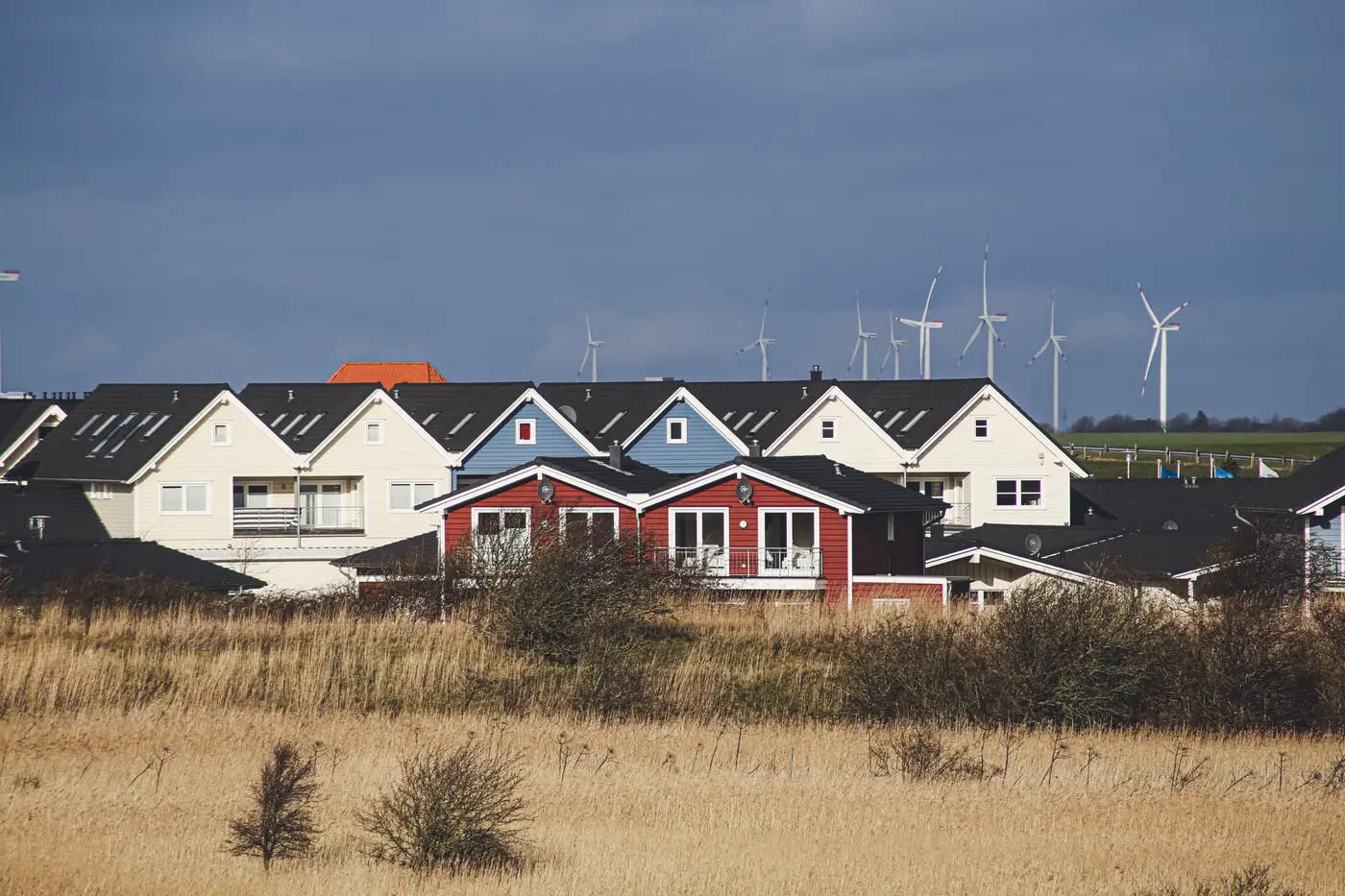
Every operating wind farm already has a landscape and visual impact assessment somewhere in its consent file. It's the document that modelled how the turbines would look from nearby roads, villages, footpaths and designated viewpoints before a single blade went up. When a site comes up for repowering, the temptation is to pull that old LVIA out of the drawer, update the turbine count, and hand it to the planning consultant. That's not how it works, and planning officers know it.
Why the old assessment doesn't carry over
An LVIA is a snapshot of a specific proposal against a specific baseline. Both of those have moved on.
The proposal has changed because repower turbines are almost never the same machine as the ones coming down. A site consented fifteen years ago might have run 80m hub heights with 70m rotors. The replacement candidate is likely 120m to hub with a rotor well past 150m. That's a different zone of theoretical visibility, a different blade tip speed and flicker profile, and in some cases a different number of turbines on the same footprint. None of that is covered by a document that modelled the old machine.
The baseline has changed too. Landscape and visual impact assessment works by comparing a "with turbines" view against a "without turbines" baseline. Fifteen or twenty years is long enough for hedgerows to mature, screening woodland to be felled or grow out, new housing to go up on the approach road, and a neighbouring site's turbines to appear on the skyline. Cumulative impact is judged against what's actually visible today, not what was visible when the original consent was granted. A reassessment has to start from a current baseline, not the one on file.
Planning authorities treat a repower as a new application, not a variation, precisely because the scale, the footprint and the surrounding landscape can all have shifted since the original grant. The LVIA has to be redone to match, usually including fresh zone of theoretical visibility mapping, new viewpoint photography, and photomontages at the proposed heights.
What a repowering LVIA for a bigger turbine covers
A visual impact reassessment for a repower candidate generally works through the same core pieces as the original, run against current conditions and the new machine:
- Zone of theoretical visibility for the taller hub height and larger rotor diameter, which is usually a bigger bounded area than the original study ever covered
- Updated viewpoint selection, because settlements, footpaths and designated routes near the site may have changed since the first assessment
- Cumulative assessment against neighbouring wind farms that didn't exist, or didn't have consent, at the time of the original LVIA
- Fresh photography and verified photomontages at the proposed tip height, since the old montages were built for a machine that's coming down
- A landscape character assessment update, where local plan designations or landscape sensitivity classifications may have shifted in the intervening years
None of this is a formality the planning consultant can skip by reusing old survey data. A reviewer who spots a photomontage built on an outdated baseline, or a viewpoint list that misses a village that's grown since the original consent, will send the application back.
What this means for picking which sites to push first
If a portfolio manager is deciding which end-of-life sites to put forward for repowering consent first, the visual impact picture is one of the things worth weighing before the LVIA scope is even commissioned. A site surrounded by mature screening and few sensitive receptors is a different consent prospect than one next to a cluster of new housing with open sightlines. Knowing that before the consultant's invoice lands helps a portfolio manager rank the queue, not just react to it.
That's the kind of groundwork Repowering Candidates is built to do: flagging which turbines in a fleet are nearing end of life and giving a rough read on how straightforward the consent path looks, before a repowering push gets scoped in detail.
If your fleet has sites due for a repowering decision soon, it's worth seeing which ones would need the lightest lift to reconsent.